
A platform that combines generative AI, autonomous agents, and a digital twin to transform how operators interact with water distribution networks.
The IAQUA project has demonstrated that a network operator can access all operational information (sensor data, leak alerts, water performance, regulations, and operational protocols) with a single query. What previously required 17 minutes and four different systems can now be resolved in just 25 seconds.
The consortium formed by AVENTEC, BGEO, AVSA, and EURECAT has successfully completed the research and validation phase of the IAQUA project, an R&D initiative that explores how artificial intelligence can improve the management of water distribution networks. The resulting platform integrates three cutting-edge technologies (generative AI, agentic AI, and a digital twin) into a unified environment validated with real data from the Aigües de Vic network.
The execution of this project has been made possible thanks to funding from the Generalitat de Catalunya within the framework of the RETECH program – Line 1 Projects for fostering transfer and innovation in the field of AI.
The philosophy of the project is not to replace the operator, but to equip them with the necessary tools to gain immediate access to all relevant information, enabling informed decision-making without technical barriers.
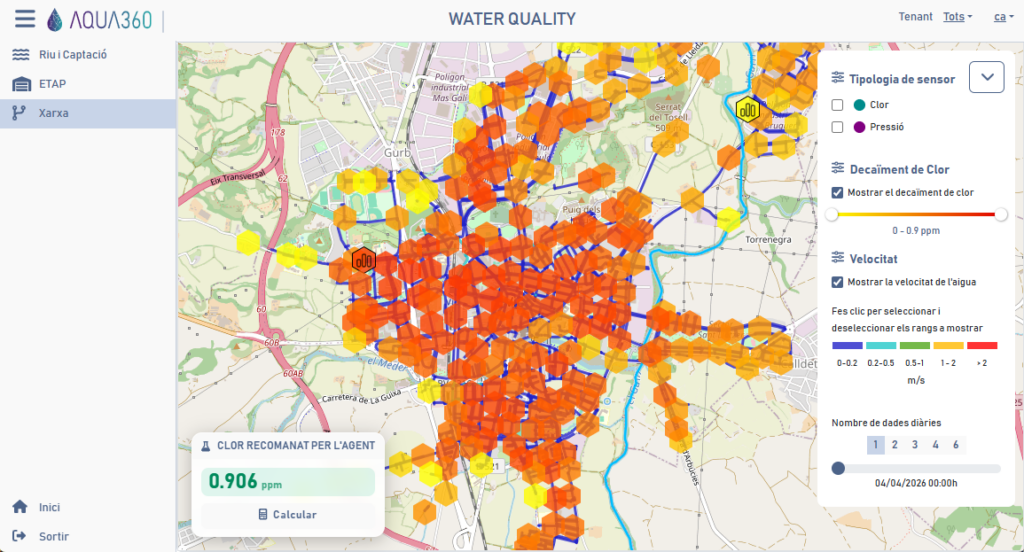
Figure 1. From the AQUA360 platform, chlorine levels can be visualized and the agent’s recommendation
on input chlorine dosage can be consulted.
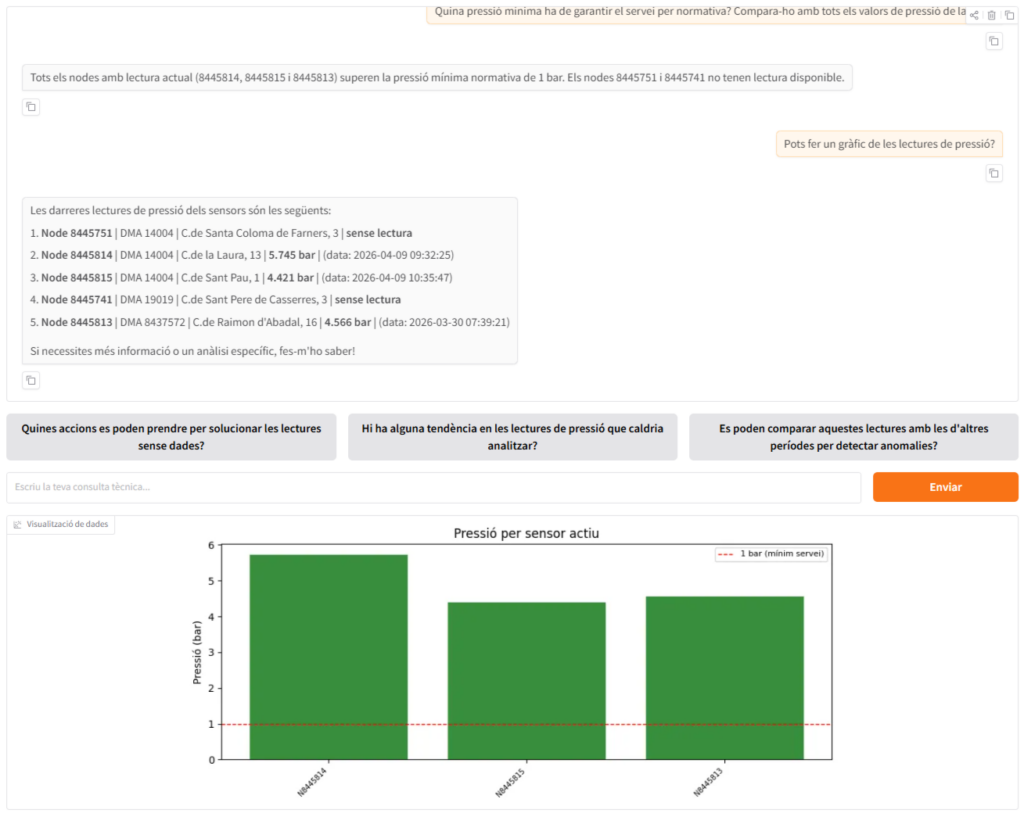
Figure 2. The IAQUA AI assistant answers queries in Catalan, automatically generates charts, and suggests follow-up questions
to guide the operator.
The challenge: fragmented information, complex access
The daily management of a water distribution network generates large volumes of information distributed across multiple systems: databases, SCADA systems, GIS platforms, technical documents, and performance reports. An operator who needs to make a quick decision—such as diagnosing a leak alert—must navigate different tools, have SQL knowledge, and mentally build an integrated view of the situation.
The IAQUA project was created to turn this complexity into an experience as simple as asking a single question.
Three technological pillars, one platform
- Generative AI: Understand and explain.
A Retrieval-Augmented Generation (RAG) system indexes Aigües de Vic’s technical documentation (regulations, procedures, simulation manuals, performance reports) and enables the language model to provide answers grounded in real evidence, eliminating hallucination risks through an automatic verification mechanism. - Agentic AI: Reason and act.
An autonomous agent with multi-step reasoning capabilities accesses real-time operational data via the MCP protocol. The agent independently decides which data sources to consult, in what order, and how to combine results, all within a read-only environment that ensures security. - Digital twin: Simulate and recommend.
Surrogate models based on Graph Neural Networks (GNN) and Physics-Informed Neural Networks (PINN) replicate network behavior at high speed. A dosing agent trained with reinforcement learning proposes optimal chlorination strategies that operators can visualize and validate through a dedicated interface.
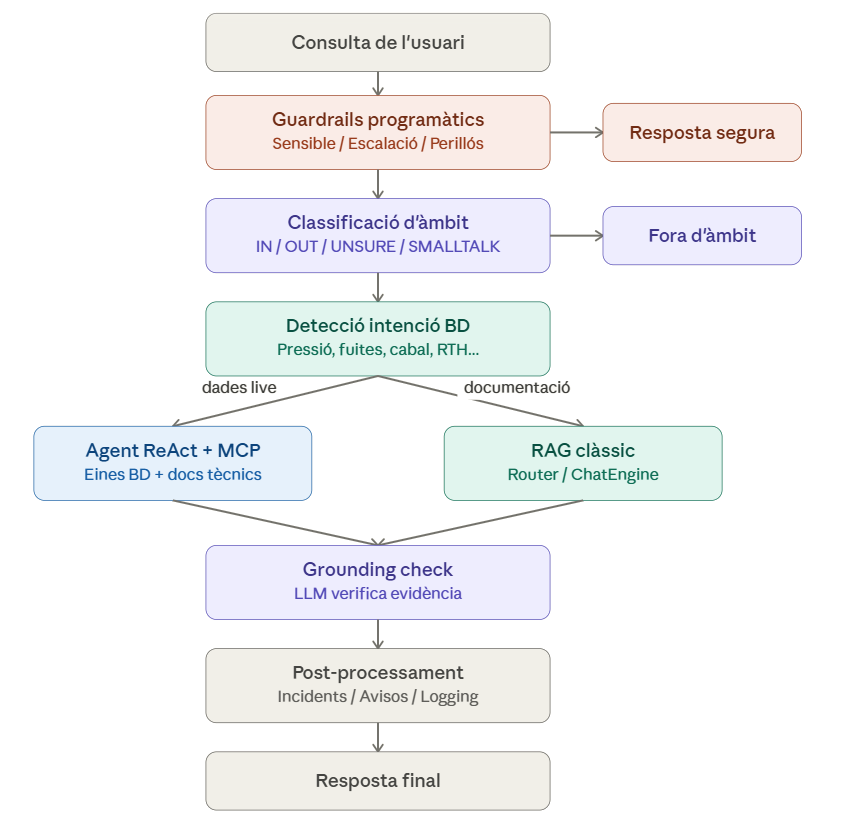
Figure 3. IAQUA platform architecture: from data pipelines to operator interfaces, including AI models and the autonomous agent.
Validation results
The platform has been validated in a laboratory environment using real data from the Aigües de Vic network, running 15 scenarios that replicate everyday operational situations: from regulatory queries to leak diagnostics and multi-sector performance analysis.
| Indicador | Resultat |
| Answer accuracy | 93% (target: ≥80%) |
| Average response time | <15 seconds |
| Improvement vs. traditional workflow | 40× faster |
| Detected hallucinations | 0 |
The grounding check mechanism automatically verifies that each response is supported by documented evidence or real data, discarding any that fail validation. This ensures that operators can trust the information provided.
Technical staff feedback has been particularly positive in three areas: the ability to centralize information from multiple systems into a single query, the automatic generation of charts that enable rapid understanding of network status, and the follow-up suggestions that guide knowledge exploration without requiring precise queries.
Security by design
In a critical context such as water network management, security is not an add-on but a foundational principle. The agent operates strictly in read-only mode: it can query the status of a valve, but never act on it.
Programmatic safeguards intercept any request involving control actions, and an explicit warning reminds users that execution always requires a qualified operator. All interactions are logged for auditing purposes.
Next steps
The validation phase has confirmed the platform’s viability and defined a roadmap for its maturation across four phases:
- Consolidation (0–3 months): expansion of the document corpus, new data access tools, and evaluation of local language models to reduce external dependencies.
- Operational pilot (3–6 months): deployment with a small group of operators under real conditions, including training and continuous feedback cycles.
- Extended deployment (6–12 months): broader access, integration with existing SCADA and GIS systems, and automated continuous improvement processes.
- Maturation and transfer (12–18 months): stable version, adaptive model retraining, and documentation for transfer to other distribution networks.
A step forward for the sector
The IAQUA project demonstrates that generative and agentic AI can be safely and effectively integrated into decision-support environments for water network management. The architecture is replicable: system specialization lies in the data and documents, not the code, facilitating adaptation to other distribution networks or service infrastructures.
The consortium continues to work on bringing the platform from the lab into daily operations, aiming to transform how operators interact with their digital systems.
AVENTEC · BGEO · AVSA · EURECAT